News
-
Application of hot-dip galvanizing
Application of hot-dip galvanizing: 1.Petrochemical industry: Hot-dip galvanizing is often used to protect petrochemical equipment from corrosion, such as pipes, valves, flanges, pumps. 2.Construction: Galvanizing technology can be applied to protect building structures from corrosion, such as steel bars, steel plates, scaffolding. 3.Light industry: Galvanized products can be used for various metal products in the light industry, such as pens, hardware, furniture. 4. Aerospace: Hot-dip galvanizing is widely used in the aerospace field to protect aircraft, rockets and other aviation equipment from corrosion.
2024 10/17
-
Process of Steel Pipe Galvanizing
Steel pipe galvanization is a meticulous process that involves a series of critical steps to ensure the longevity and quality of the final product. The initial phase, pretreatment, focuses on preparing the steel pipe's surface for the galvanizing process. This includes rigorous cleaning to eliminate any contaminants such as dirt, grease, rust, and other impurities. Degreasing and rust removal are commonly executed during this stage to guarantee a clean surface, while pickling further readies the steel pipe for zinc coating, ensuring a secure bond between the zinc and the pipe's surface. Additionally, joint treatment is essential to maintain uniformity in the galvanizing effect between the joints and the pipe body. This meticulous treatment ensures that the entire steel pipe receives consistent protection against corrosion and environmental damage. Following the pretreatment and joint treatment processes, the steel pipe undergoes zinc immersion by being submerged in molten zinc. This immersion process facilitates the formation of a robust bond between the zinc coating and the steel pipe's surface, providing a protective layer that shields the pipe from corrosion. Subsequently, the galvanized steel pipe is hung in a well-ventilated drying room to allow the galvanized layer to cool and solidify completely. Water spray cooling is then employed to rapidly cool and solidify the galvanized layer on the steel pipe's surface, further enhancing its durability and resistance to environmental elements. Lastly, edge cutting inspection is conducted to trim any non-compliant parts and ensure that the appearance quality meets the required standards. This meticulous process of pretreatment, galvanizing, and post-treatment measures ensures that the galvanized steel pipe meets high-quality standards and is well-equipped to withstand various environmental challenges, making it a reliable and durable material for a range of applications.
2024 09/30
-
What should be paid attention to when using a zinc kettle in a hot-dip galvanizing line?
In the hot-dip galvanizing sector, the efficient and safe use of a zinc kettle is crucial for ensuring high-quality galvanized products. The zinc kettle, a vital component of the galvanizing equipment, plays a significant role in the process of immersing steel materials in molten zinc to provide corrosion protection. However, certain precautions must be taken to ensure the smooth operation of the zinc kettle and the overall safety of the galvanizing line. One important consideration when using a zinc kettle is the proper maintenance and monitoring of the kettle temperature. The temperature of the molten zinc in the kettle must be carefully controlled to ensure optimal galvanizing results. Additionally, regular inspection of the kettle material, such as XG-08, is essential to detect any signs of wear or corrosion that could compromise the integrity of the kettle. Proper maintenance of the kettle lining and careful monitoring of the material being galvanized are key factors in extending the lifespan of the zinc kettle and maximizing its efficiency. Furthermore, operators must be trained in handling the galvanizing equipment, including the zinc kettle, with the utmost care and attention to safety protocols. Proper training in the use of personal protective equipment and adherence to safety guidelines are essential to prevent accidents and ensure a safe working environment. By following these guidelines and paying close attention to the operation of the zinc kettle, galvanizing facilities can achieve consistent and high-quality galvanized products, meeting the industry standards for corrosion protection and durability.
2024 09/28
-
What Is The Material Of Hot-Dip Galvanized Pipe?
Hot-dip galvanized pipe is a kind of specially treated metal pipes, mainly made of low-carbon steel, and the surface is treated through hot-dip galvanizing process, which means that pipe is dipped into molten zinc liquid at a high temperature. Now, galvanized pipes are widely used in construction (such as water supply, heating, ventilation, etc.), transportation, chemical industry and other fields. They have high mechanical properties and toughness and are easy to process and install. Features of low-carbon steel Low-carbon steel, also known as mild steel, is a steel with a low carbon content (0.02%-0.25%), good toughness and machinability, easy forging, stamping, welding and other processing, and suitable for hot-dip galvanizing process. What’s more, low-carbon steel has good corrosion resistance. Combined with hot-dip galvanizing, it can improve the corrosion resistance of the workpiece. Moreover, the cost of raw materials is low. Hot-dip galvanizing process Galvanized pipe is to immerse the low-carbon steel pipe in molten zinc liquid, so that a dense zinc layer is coated on its surface, which effectively protects the internal carbon steel from corrosion. Since the zinc layer prevents oxygen and water from coming into direct contact with the steel, oxidation reactions are reduced, giving hot-dip galvanized pipes a longer service life.
2024 08/27
-
Why Galvanized Pipes Sometimes Get Partial Rust?
Hot-dip galvanizing is a method to prevent corrosion by coating the surface of steel pipes with a zinc layer. However, sometimes the surface of galvanized pipes have sectional rust. The following will introduce the causes in detail: 1. Uneven coating The local rust may be caused by uneven galvanizing. During the galvanizing process, if there is oil, oxide or other impurities on its surface, these impurities may hinder the forming of the zinc coating, causing the steel pipe to be exposed to the air, resulting in rust. 2. Failures in zinc coating When using galvanized pipes, if they are mechanically or chemically damaged for a long time, the zinc coating will be impacted. When the coating is damaged, the exposed surface is prone to moisture, oxygen and other chemicals, leading to partial rust. 3. Aging of zinc layer After for a while, the coating of the pipe will face aging. This is because zinc layer reacts with oxygen, water vapor and other substances in the air, which will gradually form a dense zinc oxide layer. However, this layer does not have good anti-corrosion properties like its original zinc layer, and is easily corroded by a humid environment, resulting in sectional rust. 4. Environmental factors Partial rust may also be caused by environmental factors. For instance, if the galvanized pipe is exposed to a humid air for a long time, or is in a high temperature and high humidity environment, local rust will be formed on its surface. In addition, if the galvanized pipe is corroded by chemicals, it will also cause rust.
2024 08/26
-
How does hot-dip galvanizing affect new energy vehicles?
The application of hot-dip galvanizing in new energy vehicles not only improves the performance and safety of cars, but also reflects the emphasis on environmental protection. It is one of the indispensable technologies in modern automobile industry, mainly reflected in the following aspects: 1. Corrosion resistance: Key components such as batteries, motors, electronic controls, as well as the body and other external structures new energy vehicles often operate in harsh environment, like rain, high temperature, etc. Hot-dip galvanizing can significantly improve the corrosion resistance of these components and extend their service life, which is crucial to ensuring the cars’ reliability and safety in the long run. 2. Battery housing: As one of the core components of new energy vehicles, its safety directly affects the performance and safety of the entire system. Hot-dip galvanizing can provide a protective layer for battery housing, enhance its ability to resist external bad environment, help extend its service life, and reduce safety hazards. 3. Cost-effective: Although hot-dip galvanizing process may be more expensive than other surface treatment methods, considering that it can markedly promote the durability and reliability of components, this investment is worthwhile in the long term. For new energy vehicles, which have extremely high requirements for performance and life, choosing hot-dip galvanizing technology can bring better cost-effectiveness. 4. Environmental considerations: The zinc used in hot-dip galvanizing is a relatively eco-friendly metal, and the galvanizing process produces less waste.This is more in line with the principle of sustainable development than other surface treatment methods (such as electroplating).
2024 08/15
-
What Is The Difference Between Hot-Dip Galvanizing And Cold Galvanizing
1. Hot Dip Galvanizing: This process is to immerse steel object into a molten zinc bath at temperatures around 445-460°C (839-860°F). The high heat causes a metallurgical reaction where the zinc molecules bond with the metal surface, forming a strong, durable, and adherent layer of zinc. The zinc chemically bonds and becomes part of the steel being protected. This process is suitable for most shapes and sizes of steel items. 2. Cold Galvanizing: In contrast, cold galvanizing applies a zinc-rich paint to items’surface or use the electrogalvanizing method. This process results in a thinner layer of zinc than hot dip galvanizing, typically less than 0.003 inches (75 microns). Cold galvanizing is usually performed on smaller parts and those that can be handled easily without damage. It is generally cheaper but provides less long-term corrosion protection compared to hot dip galvanizing. Cold galvanizing may not be as effective for heavy-duty applications where extended corrosion resistance is required. In summary, both methods serve similar purposes, but their application and performance differ totally. The level of protection of hot dip galvanizing is more robust and suitable than its cold counterpart. While cold galvanizing is a cost-effective option for smaller parts requiring basic corrosion resistance. Hot-dip galvanizing is more expensive and more suitable for larger structures, especially for heavy-duty industrial uses.
2024 08/01
-
Treatment of zinc leakage during hot-dip galvanizing heating process
In the hot-dip galvanizing process, zinc leakage occurs sometimes. Xinbai Plating Galvanizing experts will introduce you the solution of zinc leakage: 1. The aluminum content in zinc liquid is controlled below 0.05%. It is recommended to use an intermediate alloy with an aluminum content of 5-10%(not use pure aluminum ingots directly). 2. Avoid over-pickling of high-carbon steel 3. Completely remove welding slag and prevent splash 4. Prevent damage of flux solution caused by overheating 5. Pre-apply high-concentration solvents to areas that are prone to zinc leakage 6. Keep the surface of the zinc liquid at the entrance clean and prevent aluminum content from high concentration 7. Improve the pre-treatment of hot-dip galvanizing process 8. Shorten the residence time of the process 9. Ensure the mass concentration and reasonable ratio of flux solution 10. After grinding the workpiece surface galvanized, thoroughly remove the residual scrap
2024 06/27
-
Leaders Of China Construction First Engineering Bureau Visited And Inspected Rizhao Metal Surface Treatment Ecological Industrial Park-The Key Project Of Shandong Province Undertaken And Managed By Xinbai Plating.
On May 20th, The leaders of China Construction First Engineering Bureau visited and inspected the Ecological Industrial Park of the Metal Surface Treatment Center, a key project in Shandong Province, in Lanshan, Rizhao. Chairman Ren Chengbin of Xinbai Plating(Jiangsu) Intelligent Technology Co., Ltd. accompanied the delegation for a visit and discussion. Ren gave an overview and concept of the park to the visiting leaders of China Construction Corporation, with a focus on introducing the fully automatic intelligent galvanizing workshop built by Xinbai Plating. Both sides exchanged views on the strategic positioning, planning layout, and trends in the metal surface treatment industry of the park, and expressed great interest in the intelligent, information-based, and environmentally friendly treatment technologies of the first phase of the galvanizing workshop. The leaders stated that the automation, intelligent informatization, and handling of environmental issues in hot-dip galvanizing production are the trend. Manufacturers with advanced environmental protection equipment and intelligent information management systems will have the initiative in the market. The first phase of hot-dip galvanizing project in the park has a leading level in the industry, which is a strong guarantee for the efficient development of the park. And it is stated that the plan to establish the fifth generation smart home and fifth generation factory industrial projects will be implemented as soon as possible, and practical measures will be taken together to diversify the industrial park and extend the Rizhao excellent steel industry chain. The planned area of Rizhao Lanshan Metal Surface Treatment Center is 820 acres, with a building area of 350,000 square meters. It is divided into "five zones and five centers", namely: hot dip plating area, electroplating area, hazardous waste treatment area, logistics distribution area, and live service area; R&D center (including academician workstations), testing center, incubation center, supply center, business center, etc. After the project is put into operation, it can achieve an annual output value of 4.8 billion yuan, a profit and tax of 860 million yuan, and provide employment for more than 3000 people. The construction of the project will provide good support and driving force for the extension of supporting industries in the advanced steel base in Rizhao. At the same time, it can fundamentally regulate the order of the Rizhao metal surface treatment industry, integrate market resources, achieve transformation and upgrading, and high-quality development, laying a solid foundation for the construction of a modern steel new city.
2024 06/11
-
Xinbai Plating Held Meeting On Safty Production
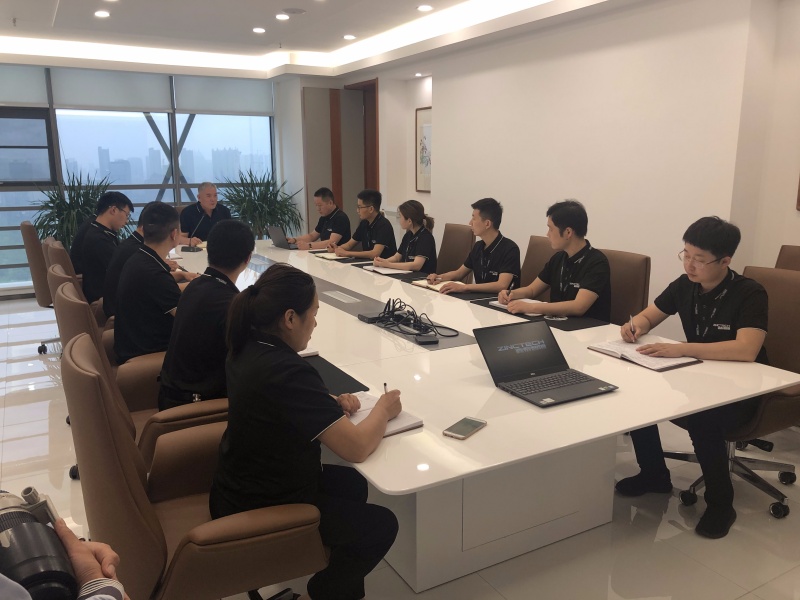
In order to implement the Measures for the Connection between Administrative Enforcement of Work Safety and Criminal Justice, and effectively ensure the safety of employees’ life and property, Xinbai Plating Intelligent Technology Co., Ltd. responded to the government's call to hold a safety production themed education meeting on May 22, 2024, presided over by Mr. Li Zimin, the General Manager of the company. The following are live photos of the meeting:
2024 05/31
-
The role and application of hangers in hot-dip galvanizing production lines
Hangers play the role of fixing and hanging workpieces in hot-dip galvanizing production lines. Hot-dip galvanizing is an anti-corrosion treatment method in which steel products are immersed in molten zinc to form a zinc layer covering the surface of the steel. In the hot-dip galvanizing production line, the workpiece needs to be hung or fixed on a hanger so that it can be evenly immersed in the molten zinc during the galvanizing process to ensure the uniformity and integrity of the zinc layer.Racks are usually made of materials that are resistant to high temperatures and corrosion, such as stainless steel or special alloys. They need to be strong and stable enough to bear the weight of the workpiece and keep its position stable during the galvanizing process. A hanger usually has a hook, clamp, or clamping device to hold the workpiece on. In addition, the hanger needs to have good electrical conductivity so that it can effectively carry the current during the electrolytic galvanizing process.Hangers are widely used in hot-dip galvanizing production lines. They can be used for workpieces of various shapes and sizes, such as steel pipes, steel plates, steel wires, etc. The design and selection of hangers depends on the geometry, weight and quantity of the workpieces. By using appropriate hangers, you can ensure even immersion and coverage of the workpiece during the galvanizing process, thereby improving galvanizing quality and efficiency. In addition, hangers can also improve the automation of the production line, reduce manual operations and improve production efficiency.
2024 05/10
-
Application trends of hot-dip galvanizing technology in the industry
Application trends of hot-dip galvanizing technology in the industryHot-dip galvanizing is a common anti-corrosion treatment technology and is widely used in construction, automobile, electric power, metallurgy and other industries. In recent years, with the improvement of environmental protection awareness and the increase in product quality requirements, the application trend of hot-dip galvanizing technology in the industry has gradually emerged.First of all, hot-dip galvanizing technology is increasingly used in the construction industry. Hot-dip galvanizing of steel commonly used in building structures can effectively prevent corrosion of the steel and extend its service life. Especially in marine environments, galvanized steel can better resist salt spray corrosion, reduce the frequency of repairs and replacements, and reduce maintenance costs.Secondly, the application of hot-dip galvanizing technology in the automotive industry is gradually increasing. After automobile parts are galvanized, they can effectively resist various corrosive factors on the road, such as rain, salt spray, chemicals, etc. This not only increases the service life of the car, but also improves the safety performance of the vehicle. In addition, hot-dip galvanizing technology can also provide cars with a more beautiful appearance and increase the added value of products.Thirdly, the application of hot dip galvanizing technology in the power industry is also very important. Electrical equipment is often in harsh environments and is easily affected by factors such as humidity, acid and alkali. Through hot-dip galvanizing, power equipment can effectively resist these corrosion factors and improve the reliability and stability of the equipment. At the same time, equipment such as galvanized utility poles and cable trays can also provide good grounding protection to ensure the safe operation of the power system.Finally, the application of hot-dip galvanizing technology in the metallurgical industry cannot be ignored. Metallurgical equipment often needs to handle high temperatures and corrosive gases, so the corrosion resistance of the equipment is very high. Through hot-dip galvanizing treatment, metallurgical equipment can effectively resist the erosion of high temperatures and corrosive gases, extend the service life of the equipment, and improve production efficiency and product quality.To sum up, the application trend of hot-dip galvanizing technology in construction, automobile, electric power, metallurgy and other industries is growing day by day. With the continuous advancement of technology and the improvement of environmental protection requirements, hot-dip galvanizing technology will play an important role in more fields and provide better guarantee for the development of the industry.
2024 05/10
Loading ...
Total 12 News