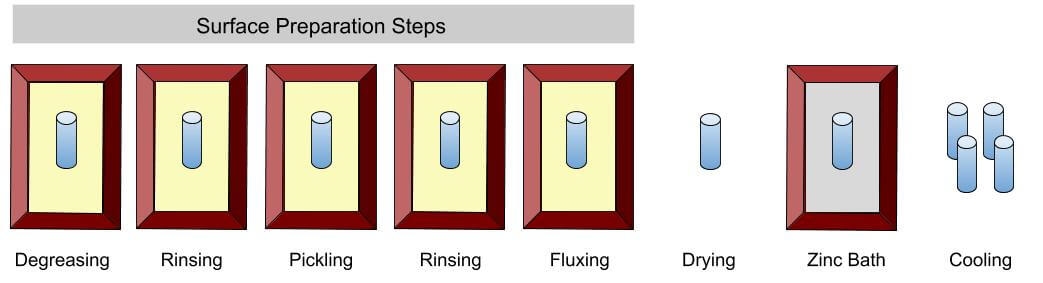
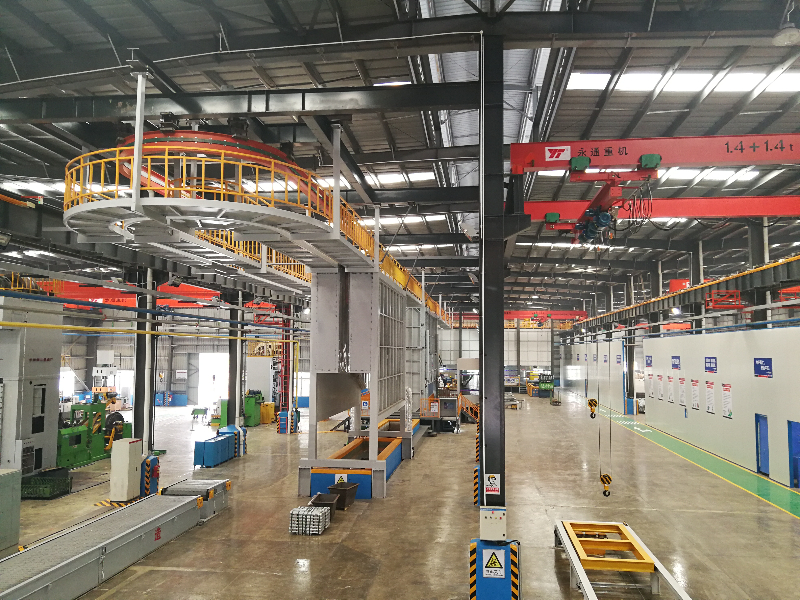
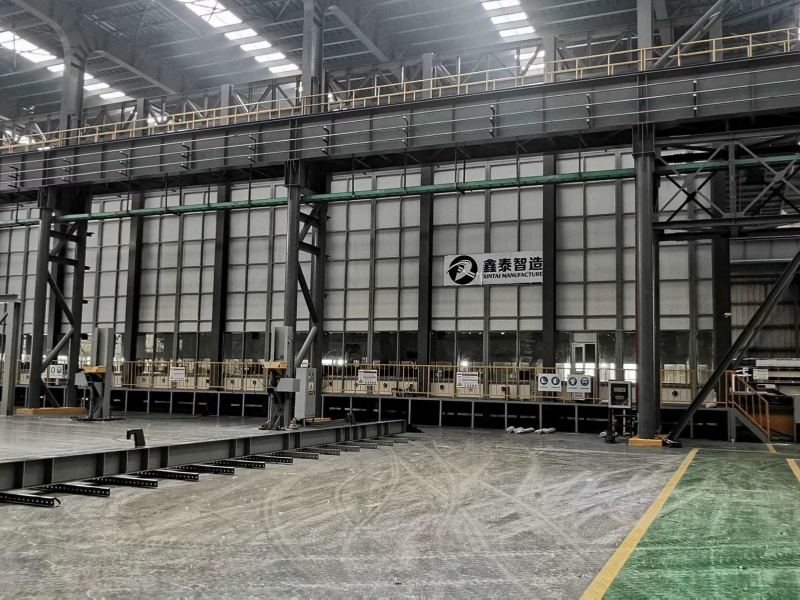
1. Hot Dip Galvanizing: This process is to immerse steel object into a molten zinc bath at temperatures around 445-460°C (839-860°F). The high heat causes a metallurgical reaction where the zinc molecules bond with the metal surface, forming a strong, durable, and adherent layer of zinc. The zinc chemically bonds and becomes part of the steel being protected. This process is suitable for most shapes and sizes of steel items.
2. Cold Galvanizing: In contrast, cold galvanizing applies a zinc-rich paint to items’surface or use the electrogalvanizing method. This process results in a thinner layer of zinc than hot dip galvanizing, typically less than 0.003 inches (75 microns). Cold galvanizing is usually performed on smaller parts and those that can be handled easily without damage. It is generally cheaper but provides less long-term corrosion protection compared to hot dip galvanizing. Cold galvanizing may not be as effective for heavy-duty applications where extended corrosion resistance is required.
In summary, both methods serve similar purposes, but their application and performance differ totally. The level of protection of hot dip galvanizing is more robust and suitable than its cold counterpart. While cold galvanizing is a cost-effective option for smaller parts requiring basic corrosion resistance. Hot-dip galvanizing is more expensive and more suitable for larger structures, especially for heavy-duty industrial uses.